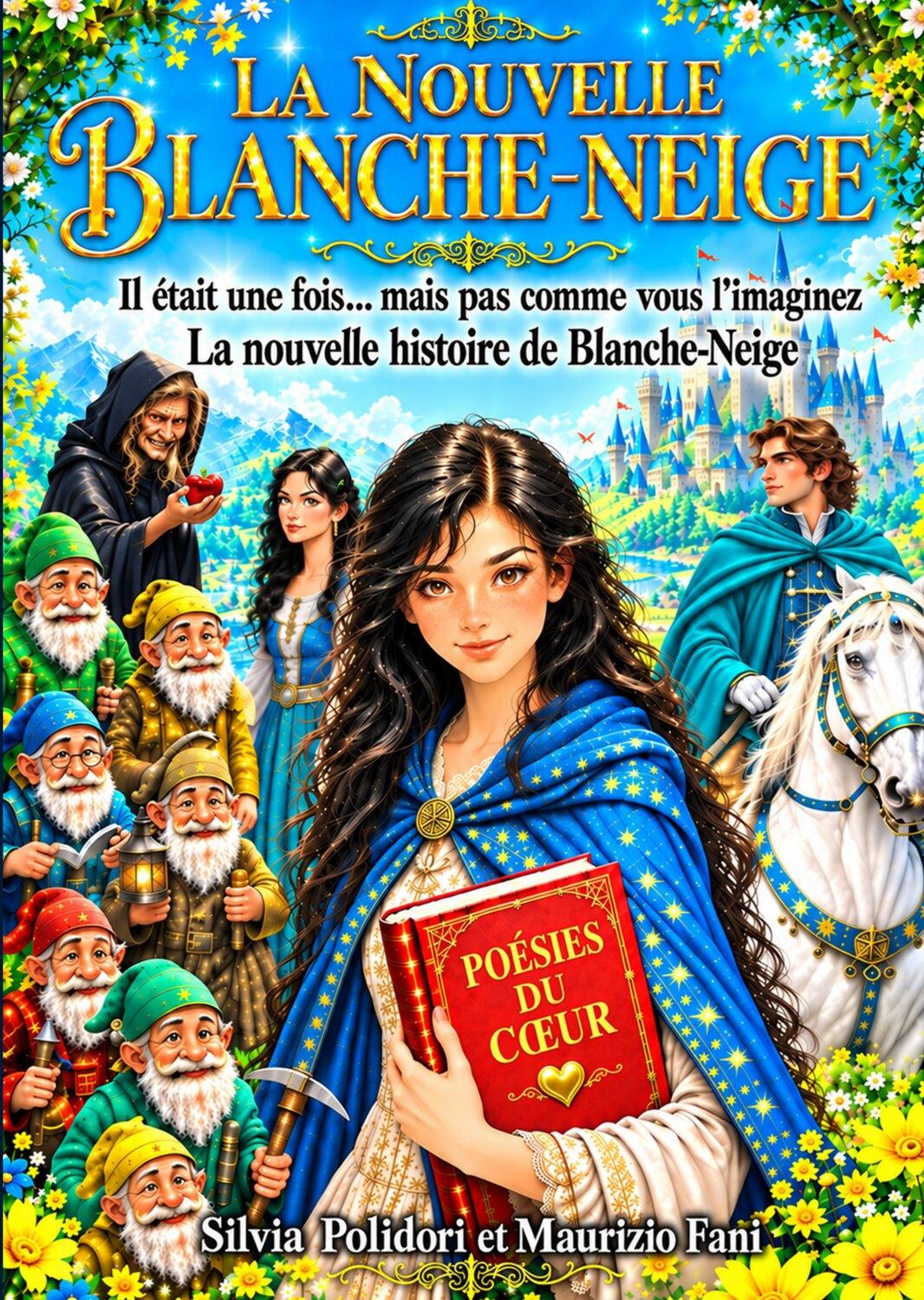
The book
The New Snow White
Once upon a time… but not as you imagine
A book that starts from a classic tale, “Snow White and the Seven Dwarfs”, and turns it into a tool for critical education for children aged 7 to 9.
- Authors
- Silvia Polidori and Maurizio Fani
- Recommended age
- 7 to 9, read together or independently
- Inside
- Poems, story, colour illustrations and colouring pages
- Language
- French edition (Italian and English editions coming to this site)
- ISBN (French ed.)
- 978-1-8089-7510-3
- Price
- 19,90 €
Where does this story come from?
Snow White’s long journey
Everyone thinks they know Snow White. Yet this story is far older than it seems, and before reaching us it travelled a long way, changing with every telling.
Before it was written
A tale without an author
Born of oral tradition, it was passed from home to home, from grandmother to granddaughter, in dozens of versions scattered across Europe. It belonged to no one, because it belonged to everyone.
Around 1634
Giambattista Basile
The first to write it down was a Neapolitan. His tale “La schiavottella” already held the seeds we recognise: a beautiful girl, a death-like sleep, a poisonous jealousy.
1812
Jacob and Wilhelm Grimm
The two brothers collected from the people the version that became famous. A cruel story, bearing witness to a harsh world and carrying its shadows with it.
1937
Walt Disney
The first animated feature film gave Snow White her colours, but also fixed a certain idea: the girl whose worth lies in her beauty, saved by a prince’s kiss.
Today
Silvia Polidori and Maurizio Fani
We do not simply tell the story again: we correct its message and deepen its meaning. Because that is how fairy tales live on — by being told again and again.
How the book works
Read, look for symbols, ask questions
In part one, every chapter follows the same path. It is an investigation: the child is not just a reader, but an explorer, a detective, a treasure hunter.
A poem
Silvia introduces each piece of the story in verse: poetry touches the emotions and awakens curiosity.
The story
Maurizio tells a piece of the original Brothers Grimm tale — not the one from the films.
The symbol hunt
We stop, and discover together the meanings hidden in what we have just read.
“What have you discovered?”
The child learns to ask questions instead of taking everything at face value.
What is a symbol?
If you draw a red heart, everyone understands “I love you”. Yet it is only a drawing: something that stands for something else, something bigger. Fairy tales are full of symbols, on every page. Learning to see them is like being given magic glasses that you can never take off.
Four themes
What the tale teaches without saying so
01
Beauty as the absolute value
The mother wishes for a beautiful daughter, the stepmother lives only to be the fairest, the prince “loves” Snow White for her beauty alone.
What the child learns : To recognise when outer beauty is presented as the primary value, and to choose to value deeper qualities.
02
Love gone astray
In the tale, “love” rests on appearance, on lack and on possession.
What the child learns : To tell healthy love — mutual knowledge, respect, free choice — from love based on obsession or need.
03
Passivity as a virtue
Snow White never makes active choices. Things “happen” to her. She waits to be saved.
What the child learns : That passivity is not a virtue but a prison. Choosing, acting, having a voice: essential abilities for everyone, boys and girls alike.
04
Invisible wisdom
The seven dwarfs, the only wise characters in the tale, mysteriously vanish from the story.
What the child learns : That wisdom exists, that it is precious, and that it must be sought even when culture makes it invisible.
Part two
The new tale
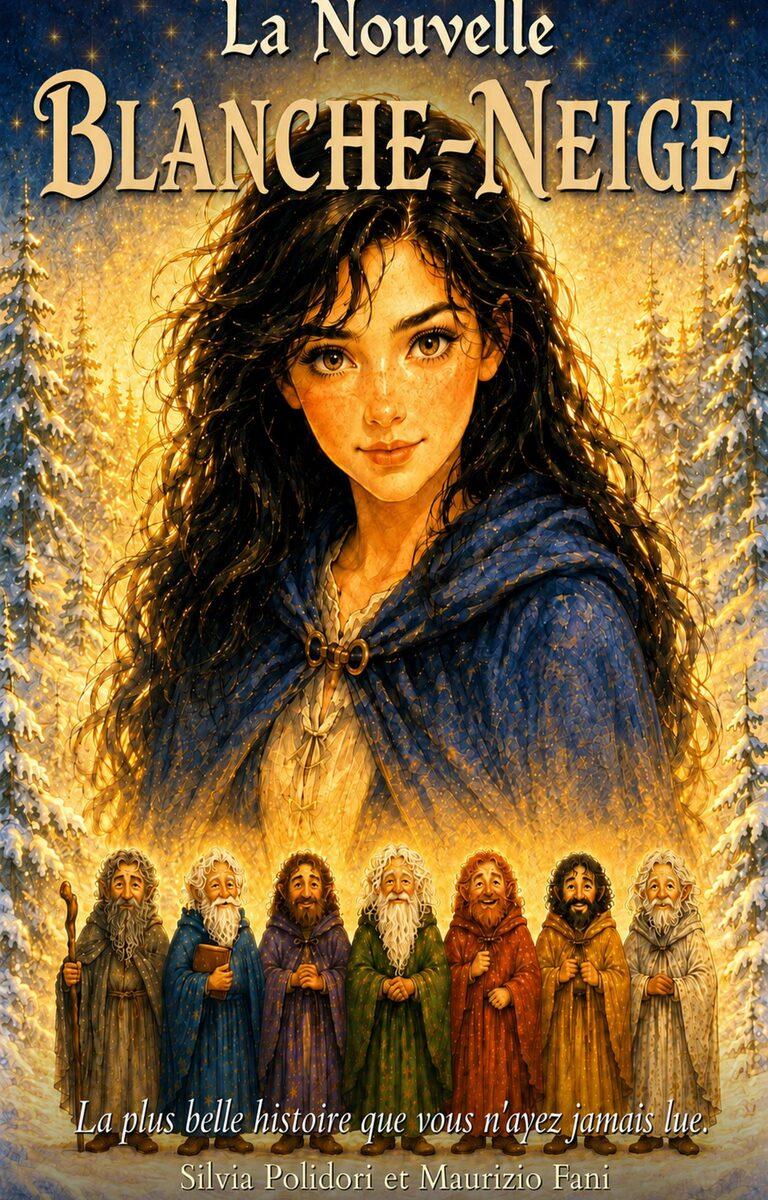
This new version keeps the magic of the tale — the snow, the mirror, the forest, the seven sages who live there — but changes its meaning, while staying true to the emotions of an eight-year-old child.
Snow White is not woken by a kiss: she wakes because her body, nourished by love, overcomes the poison, and because she saves herself by choosing to come back. The queen is stopped by the truth, not by revenge. And the ending is not a wedding: it is a whole life, rich in meaning.
Three colours, three gifts
Red — Life, and the courage to face difficulties.
White — Sincerity, a pure heart eager to discover the world and itself.
Black — The unshakeable depth that does not give way before storms.
The seven sages of the forest
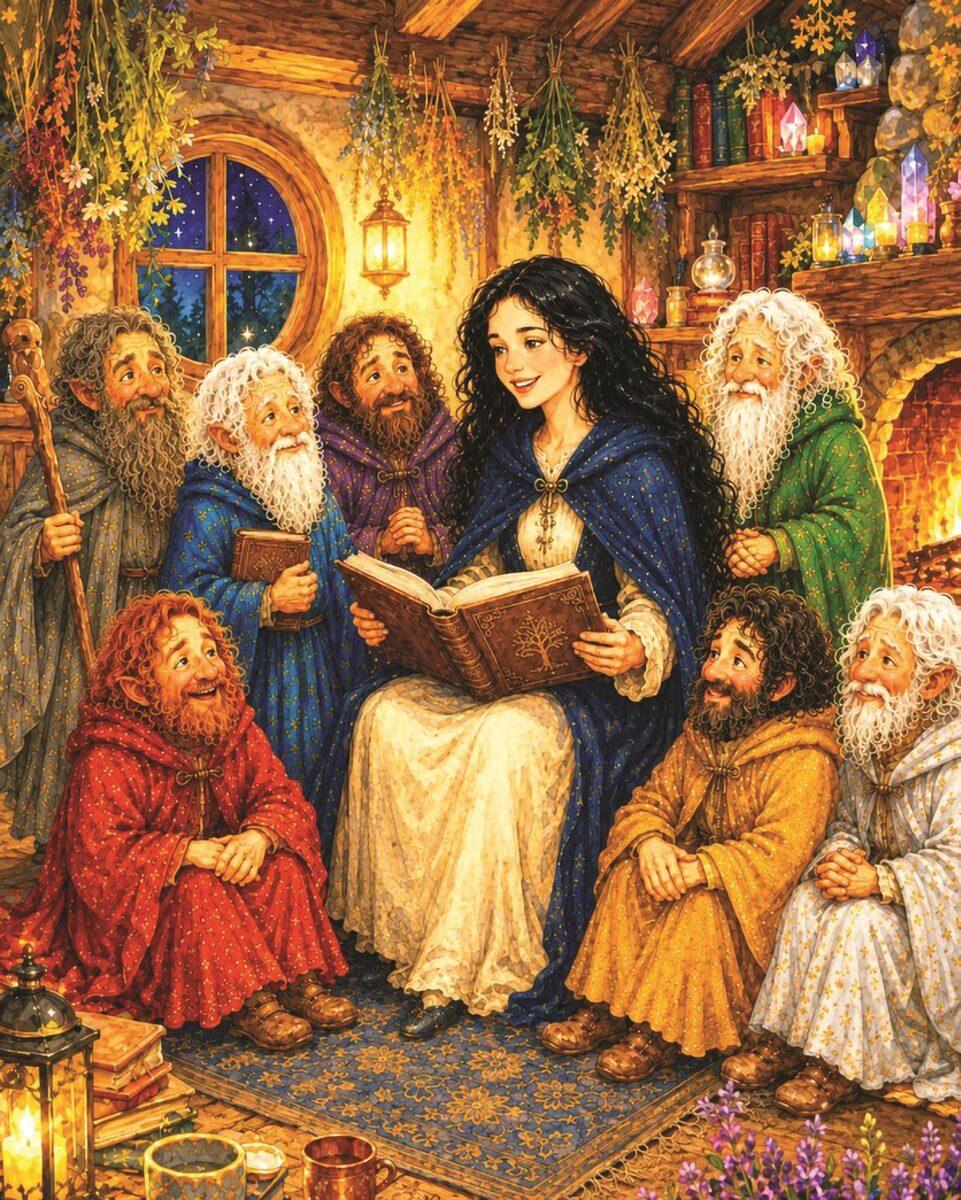
Those the old tales called dwarfs become the ancient inhabitants of the forest: sages the world has underestimated. Each embodies a facet of wisdom — attention, reflection, wonder, joy, dreaming, peace, lightness. They save Snow White not by magic, but through real knowledge and months of attentive care.
Excerpt
Before we begin…
Dear little reader… perhaps you already know this story.
There is a princess, a queen, a mirror and seven wise friends who live in the forest.
But this Snow White is a little different from the one you are used to hearing about.
Make yourself comfortable. Pull up the blankets if it is night. And come with me, far, far away, beyond the seven mountains, to a kingdom where winter lasts six months and the snow falls as light as swan feathers.
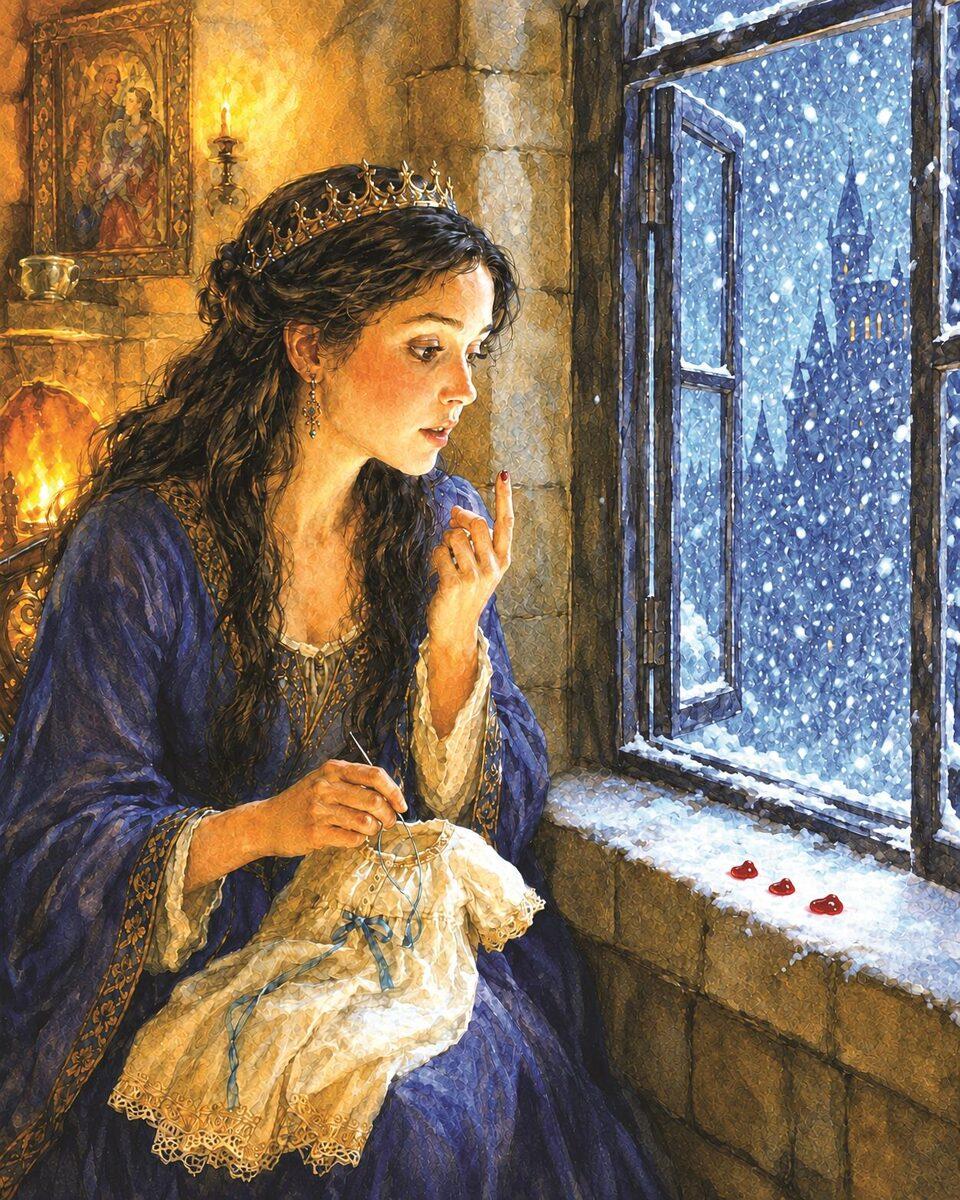
The story begins right there, by a window…
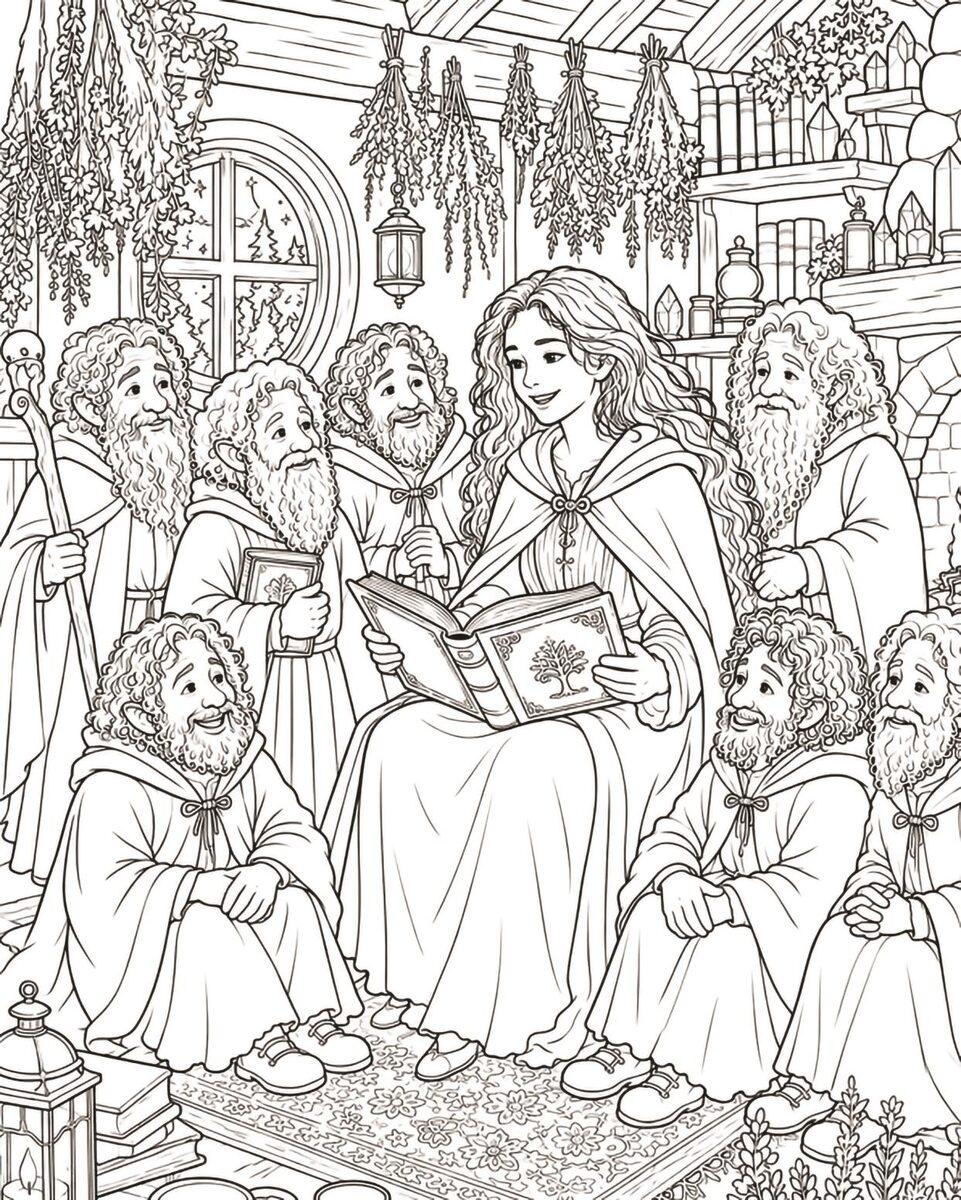
Pictures to look at… and to colour in
Every illustration in the book comes with its line-art version, ready to colour. And at the end, a blank page awaits the child: “My story and my poem of the heart”.
Contents
Inside the book
- Forewords
- Snow White’s long journey
- Letter to parents
- Introduction: Welcome, little explorer!
Part one — The tale and its symbols
- 1A mother’s wish
- 2The magic mirror
- 3The lie
- 4The forest as a guide, not a prison
- 5The first two attempts
- 6The poisoned apple
- 7The prince and the “happy ending”
- 8The wedding and the stepmother’s punishment
- 9The end of the story
Part two — The New Snow White
- 1The queen who wished for a daughter
- 2The stepmother and the mirror
- 3The huntsman who said no
- 4The woods and the hidden house
- 5The seven of the woods
- 6Winter together
- 7The mirror tells the truth
- 8The three deceptions
- 9The sleep that was not death
- 10The awakening
- 11The return and the truth
- 12Justice, not revenge
- 13A happy ending that is not a wedding
- ✦Epilogue: the stories we choose to tell
That is how the world changes: one story at a time.